
A Massive (and Awkward) Downgrade
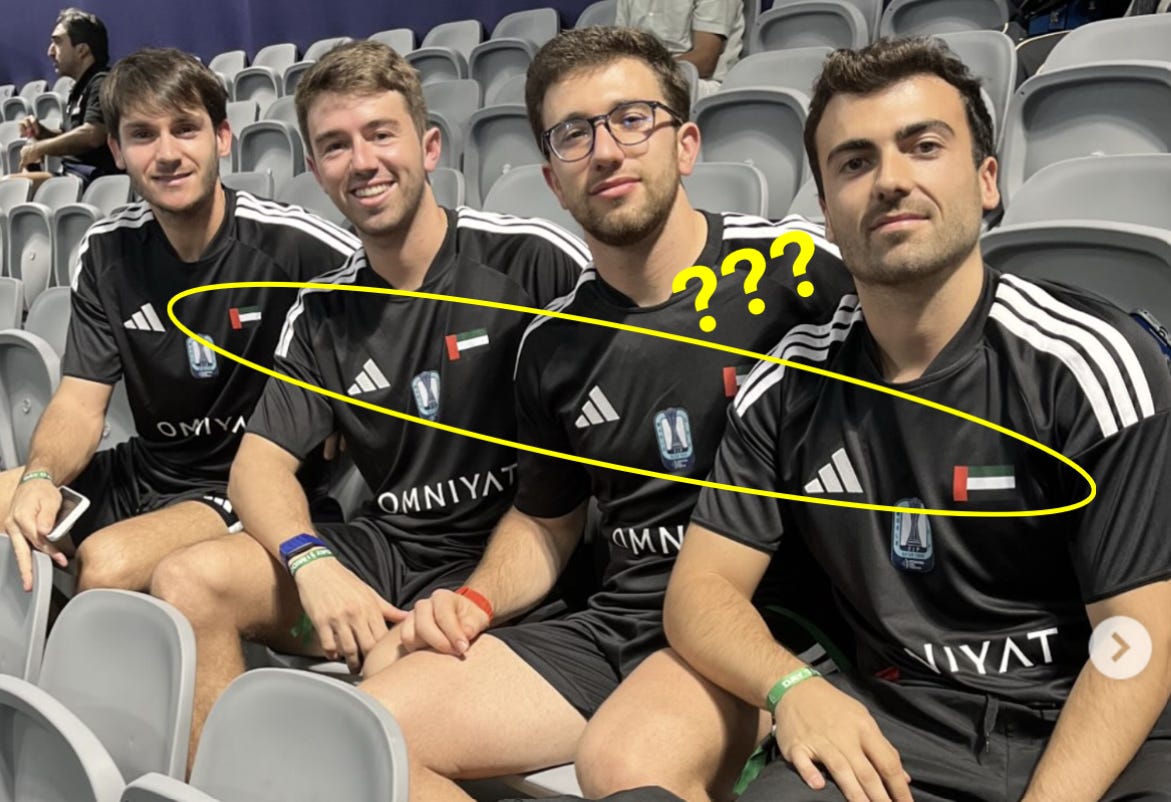
The United Arab Emirates had a pretty ambitious World Cup campaign in mind. There’s just one problem: five of its Spanish-born recruits were told they couldn’t play.
Íñigo Jofre, Arnau Ayats, Enrique Goenaga, Ignacio Vilariño, and Fran Jurado were all ruled ineligible to represent the UAE in Doha under stricter International Padel Federation (FIP) eligibility rules.
The regulations require naturalized players to demonstrate a genuine connection to their new country via birthplace, family ties, or residency. Federations can also request special exemptions for up to two players per competition, subject to FIP approval.
For context, the UAE finished fifth at the men’s 2024 World Cup, with several Spanish recruits helping turn the team into a legitimate contender. This time around, losing five established players left a considerably weaker squad. The UAE subsequently finished 16th (of 16 men’s teams)… gulp.
Jofre, who was among those left watching from the stands, expressed his disappointment. He also revealed that the case had been taken to the Court of Arbitration for Sport, potentially opening the door for further clarification.
Our Broader Take
Zooming out, recruiting foreign talent to strengthen national teams isn’t exactly unique to padel. Some comps, for example:
Soccer (FIFA) allows players to represent countries through ancestry or established residency
Basketball (FIBA) generally limits national teams to one restricted naturalized player.
Track & field, cross-country running, race walking, etc. (World Athletics) takes an even harder line, having recently rejected 11 athletes seeking to transfer allegiance to Turkey over what it described as a coordinated recruitment strategy.
The FIP lands somewhere in between. Its rules generally require three to five years of residency for players naturalized after birth, but federations can request exceptions for up to two players per competition.
Money is another key side to this conversation. For players outside the sport’s top 10, making a living on tour ain’t easy. Travel, accommodation, coaching, and equipment can eat through prize money quickly. Representing a wealthier federation can offer a potentially attractive financial opportunity, even for established professionals.
Meanwhile, countries increasingly view international sport as a vehicle for visibility, influence, and prestige. The UAE’s involvement in padel doesn’t exist in isolation from that broader trend.
It’s just that there’s a difference between representing a country with which you have a genuine connection vs. effectively being hired to represent one.
If padel wants a seat at the Brisbane 2032 Olympics, it needs transparent, consistently enforced eligibility rules that protect competitive integrity without unnecessarily penalizing legitimate dual nationals or players seeking opportunities to sustain their careers.
TLDR, the goal should be to ensure national teams truly mean something, while recognizing that legitimate ties to a country can extend beyond where someone was born, whether through family, residency, or personal history.
Want more recent US & global padel analysis? We got you covered:
Thanks for reading! My promise: I’ll keep the newsletters coming, you share with a friend if you’re enjoying. Está bien? Forward to a friend.
For more on-the-ground 🌎 padel content from a 🇺🇸 POV, follow @elremate.padel.usa on Instagram! And if you have any feedback, news to share, or are interested in becoming a preferred partner of El Remate, just respond to this email :)
See you next week & keep smashing those volleys 🎾